Speaking, Small Groups & Workshops
I am able to speak or host workshops to make space for acknowledging, processing, and finding the new sense of belonging when there is loss, change, or lack of engagement. Every talk, workshop, and resource is made uniquely because no group, community, or situation is the same.
Evaluation & Consultation
Don't tell the other categories, but this is my favorite place to work. I am able to come into organizations and communities, evaluate where they are at, look at where they want to be, and provide recommendation and support to get there. This support doesn't fit in a box, it molds around your needs.
Transition Liaison
When a transition is taking place, especially when it involves leadership, having a liaison provides an external support to facilitate the transition through communication and transparency. I am fortunate to have a network of liaisons so that based on the transition, the organization or community, and the exact needs, we will find you the right fit.
Grief in Workplaces & Communities
Grief does not stay at home when we come to work. It shows up in our workplaces, organizations, congregations, schools, volunteer groups, and communities. Whether it is the death of a colleague, a community member, or a loved one of someone on the team, loss affects individuals and the systems they are part of. Yet many leaders and organizations feel unprepared to respond when grief enters the workplace.
One of the most common situations organizations face is the death of a colleague. Team members may experience shock, sadness, anger, confusion, or anxiety while also trying to continue their day-to-day responsibilities. In these moments, compassionate communication, acknowledgment of the loss, opportunities for remembrance, and flexibility can help individuals and teams begin to process what has happened. Grief does not follow a timeline, and employees may continue to feel the impact long after memorial services have ended.
Another common challenge occurs when an employee experiences a significant personal loss and returns to work while grieving. Colleagues often want to be supportive but may be unsure what to say or do. Organizations can foster a culture of belonging by creating environments where grief is acknowledged rather than avoided. Leaders who model empathy, provide practical support, and encourage open communication help create workplaces where people feel seen, heard, and supported during life's most difficult transitions.
I can help organizations and communities build grief-informed cultures through education, facilitated conversations, leadership support, workshops, and practical resources. Together, we can create spaces where people feel seen, heard, and connected through life's transitions.
Interested in bringing a grief-informed workplace workshop to your organization or community group?
Contact Kristina to discuss presentations, leadership training, facilitated conversations, or customized support for your team.
Leadership transitions are some of the most significant moments in the life of an organization. Whether a founder is stepping away, a new executive is being hired, a board is navigating succession planning, or an organization is restructuring, these seasons of change create both opportunity and uncertainty. While much attention is often given to selecting the right leader, the transition itself deserves just as much intentional planning and care.
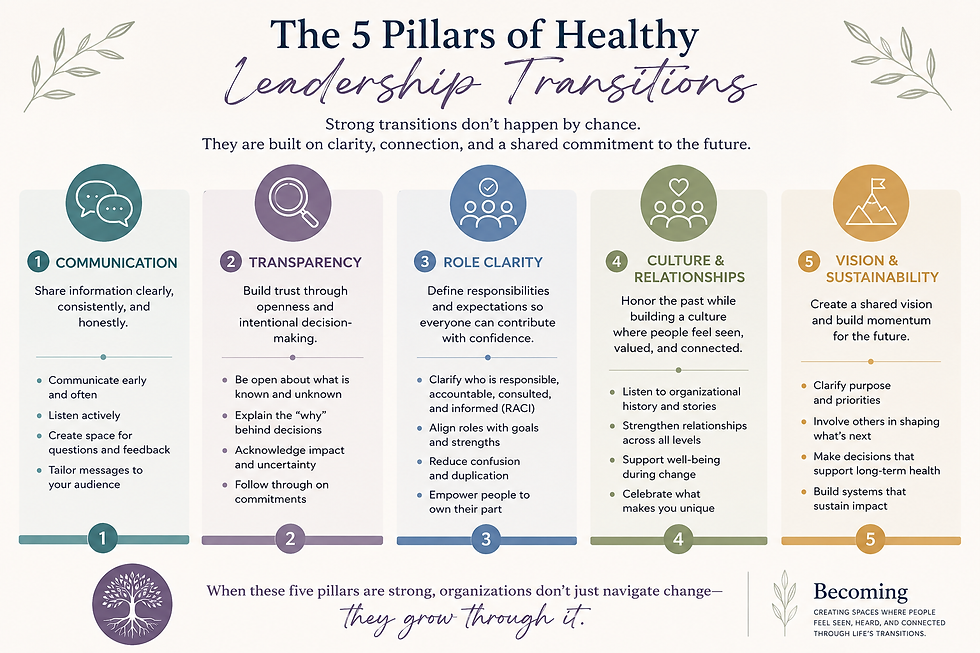
Successful leadership transitions require more than strategic planning—they require thoughtful communication, transparency, and trust. During periods of change, employees, volunteers, board members, and stakeholders naturally begin asking questions about the future. Clear communication, defined roles, and opportunities for honest dialogue help reduce uncertainty and create confidence. Leaders don't need to have every answer immediately, but they do need to create an environment where people feel informed, valued, and included throughout the process.
Healthy transitions also require a balance between honoring the past and embracing the future. Every organization has a unique history, culture, and way of doing things. Effective leaders take time to listen, learn, and understand what has made the organization successful before implementing change. At the same time, transitions create opportunities to evaluate systems, strengthen relationships, clarify responsibilities, and build a shared vision for what's next. The goal isn't simply to replace a leader—it's to help the entire organization move forward together.
I truly believe leadership transitions are about more than organizational charts and strategic plans. They are about people. By combining practical tools like communication plans, stakeholder engagement strategies, leadership assessments, and RACI responsibility matrices with a deep understanding of the human side of change, organizations can navigate transitions with greater clarity, compassion, and confidence. Because when people feel informed, supported, and connected, organizations don't just survive change—they become stronger because of it.